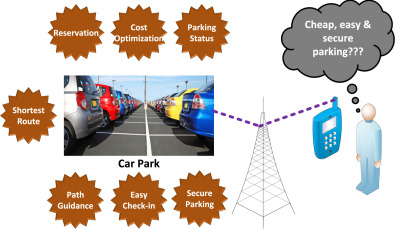
Advanced Parking Guidance Systems are a form of technology that is designed for drivers providing them with real-time parking information. Now, this is one of those technological inventions that we never thought would exist but now cannot fathom our lives without. APGS or Advanced parking systems have made our lives easier while removing all the parking problems we knew we had.
It can be seen as one of the many areas of significant advancement in parking technology over the last five years. For parking structures, these systems are based on advanced sensor technology such as still or video camera images.
Advanced Parking Guidance systems are great as they help you leverage the power of image processing and AI to offer the dual advantages of the features available. They come with features like very high accuracy and value-added features like object type classification, licence plate capture, etc.
How do these Advanced Parking Guidance Systems Work
Different parts together combine for making an advanced parking guide system. Needless to say, each that goes in the advanced parking systems is a little different, but the core concept is the same and works on the same set of technologies.
Using a perfect compilation of these technologies, the Advanced Parking Guidance Systems can do much to help the drivers to open spaces faster and get the parking space without putting in much effort.
The system works with a mixture of processes like variable Message Signs (VMS), onsite communication, and vehicle processing, other than this, the most common ways in which the parking guidance system works are as follows.
- 1. The most important element of the APGS is the ‘car’, so it’s obvious that once the car is ‘scanned’, it enters the car park by given the special ticket machine or just by the entrance.
- 2. After that, the variable message signs (as mentioned above) direct the drivers to the open spaces. This can happen by telling them how much space is available on their level, in a certain section of the car park, or even in the down row of each parking structure.
- 3. Once the parking space indicators are used to show up the free spaces. The use of green LED comes into play by telling how the parking car implementation can vary.
- 4. Once a car is parked in a vacant space, the special sensors pick up the vehicle and reduce the available parking spots in the saved temporary database. As the parking space is filled, the green LED will turn red to indicate that the parking space has been taken.
- 5. On returning, the enabled advanced parking system helps the driver in finding the car. The system helps the driver to find the car via a help station available at the car parks or TVC Parking Management parking lot management.
- 6. Now, as the car is fully out of space, it clears the proximity and the parking spot is once again marked as free where a new vehicle will be directed to get parked in there.